The Van Vlaenderensmolen
A windmill was more than a machine. For the Van Vlaenderen family, it was a livelihood, an identity, and a beacon in the East Flanders landscape.
The Van Vlaenderensmolen
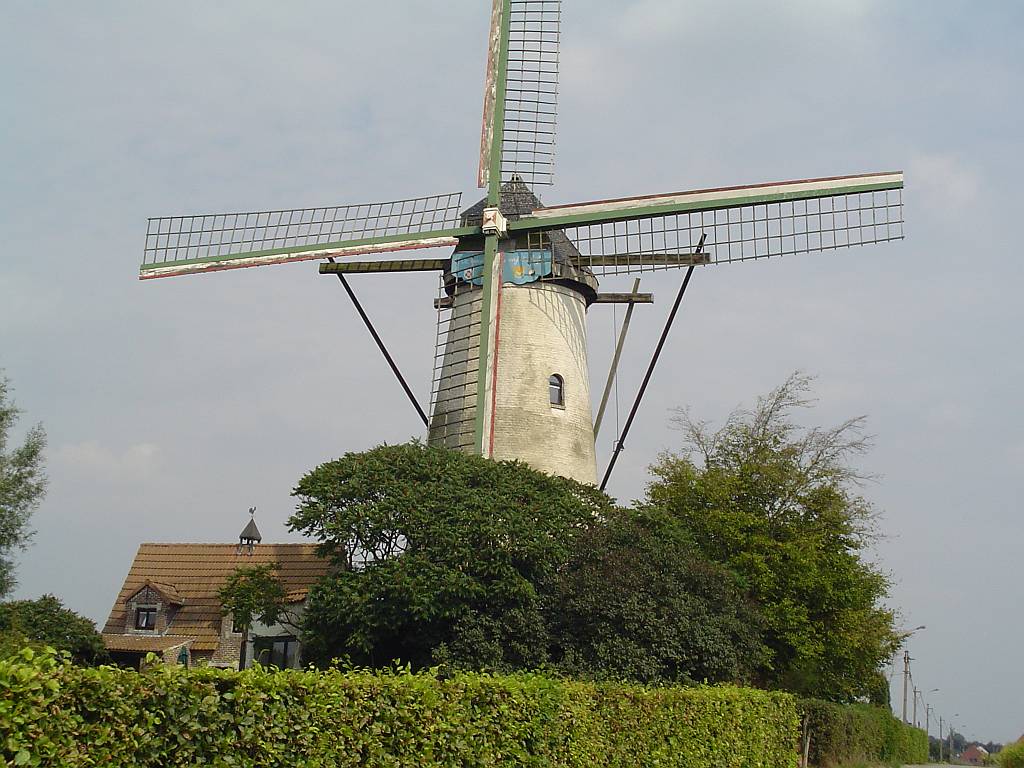
In the village of Vinderhoute, within the municipality of Lovendegem in East Flanders, stands a historic windmill that has long been known as the Van Vlaenderensmolen. This wooden post mill, mounted on a central pivot so the entire structure could be turned into the wind, is one of the most tangible connections between the Van Vlaenderen family and the landscape of the Meetjesland.
The mill took its name from the family that owned and operated it. In 1886, the property was purchased by Eduardus Van Vlaenderen (1832–1886), a farmer and miller who established the family's presence at the site. This acquisition made the Van Vlaenderen household part of the network of millers who played an essential role in the region's agricultural economy.
Following Eduardus's death later that same year, the mill remained within the family, continuing its association with the Van Vlaenderen name into the next generation. His son, Frans Eduard Van Vlaenderen (1879–1954), grew up in the miller's household and continued the family's agricultural and milling traditions.
The Miller's Place in Flemish Society
In rural Flanders during the nineteenth century, the miller occupied a position of considerable importance. Farmers from the surrounding countryside brought their grain to the mill to be ground into flour, and the mill stood at the center of village economic life. Ownership of a working windmill required capital, land, and technical knowledge, and millers were often among the more established families of their communities.
Wind power was the renewable energy of its age — patient, unpredictable, and essential. The miller's skill lay in reading the weather, adjusting the sails, and coaxing work from the wind. It was a craft passed from father to son, bound up in the rhythms of the seasons and the needs of the surrounding farms.
The history of the Van Vlaenderensmolen also reflects the vulnerability of these wooden structures to the forces of nature. In 1905, a powerful storm severely damaged the mill. The family rebuilt and restored the structure, ensuring that the mill continued to serve the surrounding farms and remained a visible landmark in the landscape of Vinderhoute.
Today, the Van Vlaenderensmolen stands as a rare physical reminder of the family's historical presence in the Meetjesland — a point where landscape, livelihood, and surname intersect.
The Meetjesland Region
The Meetjesland is a historic region in the province of East Flanders, Belgium, lying between the cities of Ghent and Bruges. It is a flat, green landscape of polders, canals, and small villages — a world shaped by water management, farming, and the rhythms of the seasons. The Van Vlaenderen family appears in the records of several Meetjesland villages, including Bassevelde, Ursel, Evergem, Boekhoute, and Merendree.
Vinderhoute, Lovendegem, East Flanders, Belgium
51°06′N 3°36′E
View on Google Maps →