The Van Vlaenderen Name
Van Vlaenderen means, quite literally, "of Flanders" — the northern province of modern Belgium, and before it the great medieval County of Flanders. A surname built straight from a place this way is what scholars call toponymic, and on the face of it the name explains itself: this family came from Flanders. The puzzle this page follows is that the record won't quite let it stay that simple.
"Van Vlaenderen" looks like a plain "from Flanders" label — yet its historic bearers cluster inside Flanders, where that label would tell a neighbour nothing. The name, it turns out, did several different jobs in medieval documents; and for the families we can actually document, the evidence leans away from a place-of-origin tag and toward a mark of connection to the Counts of Flanders — most firmly, the acknowledged children of the comital house. Whether any living family descends from those lines is the open question our DNA project exists to answer.
A Place-Name That Points Inward
Early parish and civic records show the name concentrated within a relatively small area of the Meetjesland in East Flanders, particularly in Bassevelde, Boekhoute, Evergem, Lovendegem, Sleidinge, Ursel, and Wessegem. The continuity of the surname in this region across multiple generations invites closer historical examination.
Here is the first oddity. A name meaning "from Flanders" should be most useful far from Flanders — out where calling someone "the Fleming" actually picks them out of a crowd. Yet the oldest and densest clusters of Van Vlaenderen bearers sit squarely inside the county: in those Meetjesland villages, around Ghent, and near Cassel in French Flanders. Inside Flanders, "from Flanders" tells a neighbour nothing. So why does the name pool exactly where it carries the least information? That single question is what turns a tidy etymology into a research project. (The distribution we can see so far is drawn from Geneanet; a fuller database of parish records is in progress, and so far agrees.)
Where the surname clustered over time
Across three time windows, the recorded bearers of Van Vlaenderen concentrate in a handful of clusters inside the historic County — early on in French Flanders, then the Meetjesland and Ghent, with a later offshoot in Brabant — rather than scattering as a place-of-origin name would. Use the buttons to move between periods.
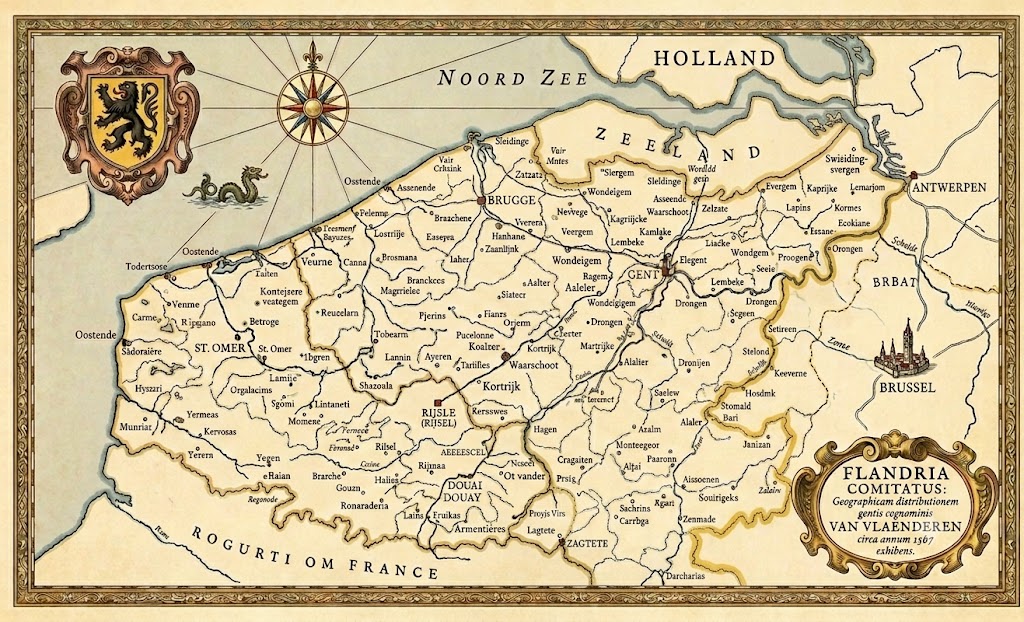

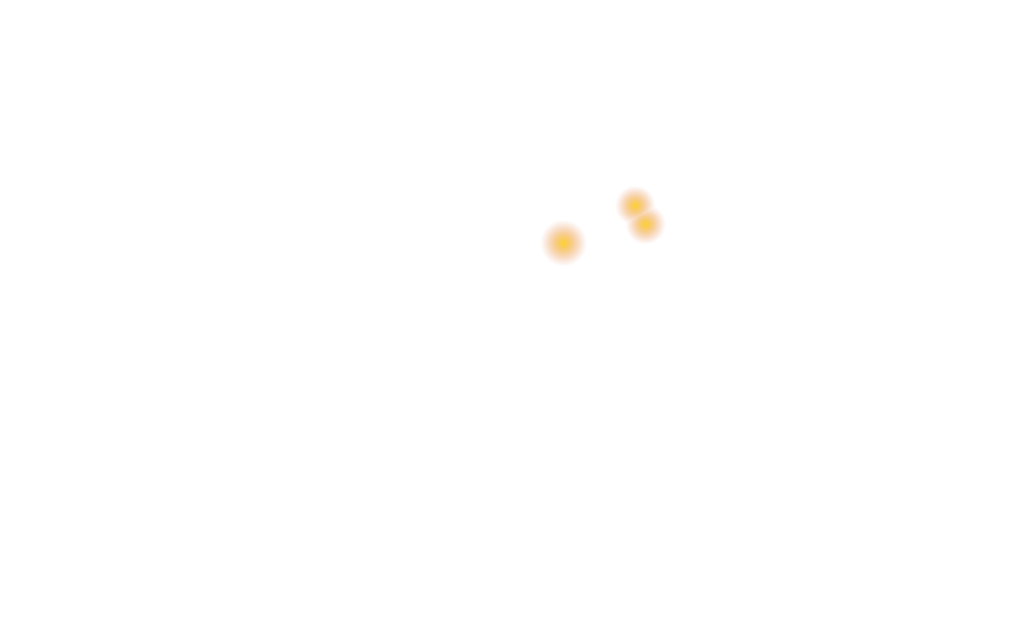
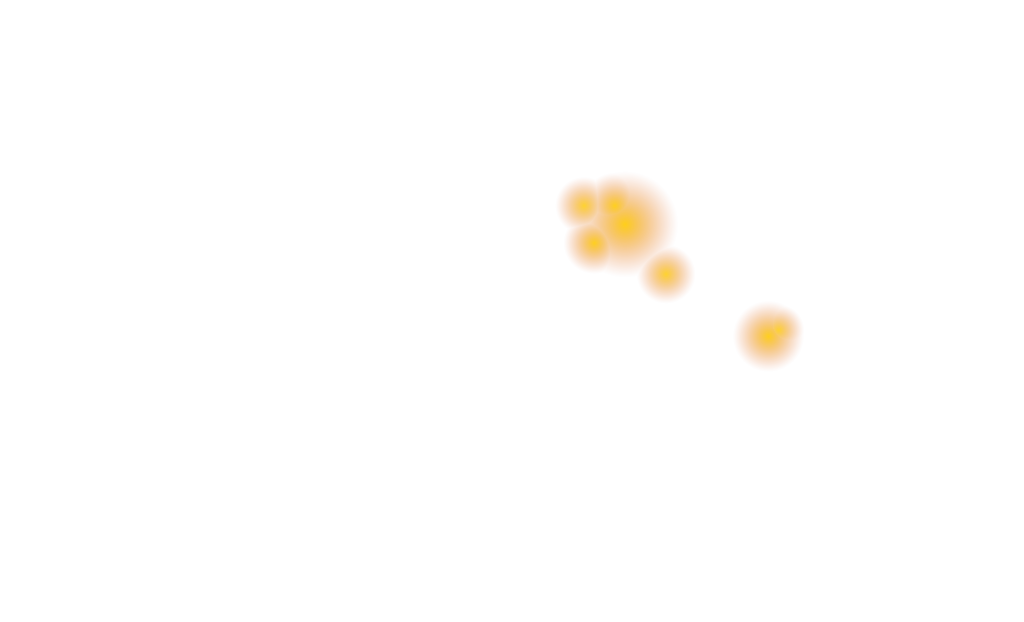
Surname locations and per-municipality counts from Geneanet (records to c. 1600): van VLAENDEREN on Geneanet. The Van Vlaenderen project's own database adds more comprehensive medieval and parish records but remains thin for the tumultuous 1500s — which is why the 16th-century view here is sparse. The antique base map and the density rendering are original.
A fuller database-driven map of the documented parish-register bearers is in progress and will appear in a future release.
What Was the Name Pointing To?
The form of the name is settled — it is built from a place-name, just as the dictionaries say. The open question is its referent: what the name actually pointed to for the people who used it. That is not a simple either-or. Four readings are possible — and several could be true at once, of different families in different places.
None of these has to win outright — a place-name for one family, a comital tie for another, all under the same spelling. But weighed against where the bearers actually cluster, the place-readings fit the documented families poorly, the office route stays open, and the descent route is the one with the documents behind it. Whether your line connects to it is a separate question — and the one the Y-DNA project is built to answer.
What "Van Vlaenderen" Was Doing in Medieval Documents
Knowing what the name pointed to is only half the task. The other half is what the phrase was doing in a specific archival record — because before a single mention can count as evidence for a family, you have to know which job it was performing that day. "Van Vlaenderen" did at least four.
Only the fourth is a hereditary surname. The first three have to be ruled out before a record counts — and the third, service to the count, is itself one of the ways a surname could be born (it is the "office" route above).
The genealogical case rests entirely on Function 4. But Functions 1–3 are not noise — they are why a surname built from this phrase could take hold at all: the words were prestigious and administratively everywhere for two centuries before the first hereditary bearers appear. That administrative prestige is the soil a surname built on the phrase could take root in — whether through an office-name passed down (Function 3: plausible, but for Van Vlaenderen still undocumented) or, as the documented bearers show, through the comital bloodline itself. It does not make the name generic; it makes its survival meaningful.
The name appears, at first glance, to explain itself. But when the earliest surname populations are mapped geographically across three centuries, they cluster in ways that pure toponymy cannot explain — concentrated inside Flanders itself, stable over two hundred years in specific villages. This analysis sets out what the documentary and distributional evidence actually shows.
Read the Analysis →"The name Van Vlaenderen is, in itself, a piece of history — a record of movement, identity, and belonging written into the family's very title."
Spelling Variations
Before standardised spelling was enforced through civil registration in the Napoleonic period (after 1796 in Belgium), surnames were recorded phonetically by parish priests and local officials. The Van Vlaenderen name appears in historical documents in a wide variety of forms:
If you are researching the Van Vlaenderen family in historical archives, it is worth searching for all of these variants, particularly in records predating 1800.
From an admiral and a prioress to lawyers, millers, an emigrant, and an executed résistant — and the countesses whose comital title the surname may descend from. Meet the documented people who carried the name, and the open question of which of them are family.
Meet the bearers →The Cronike Van Vlaenderen
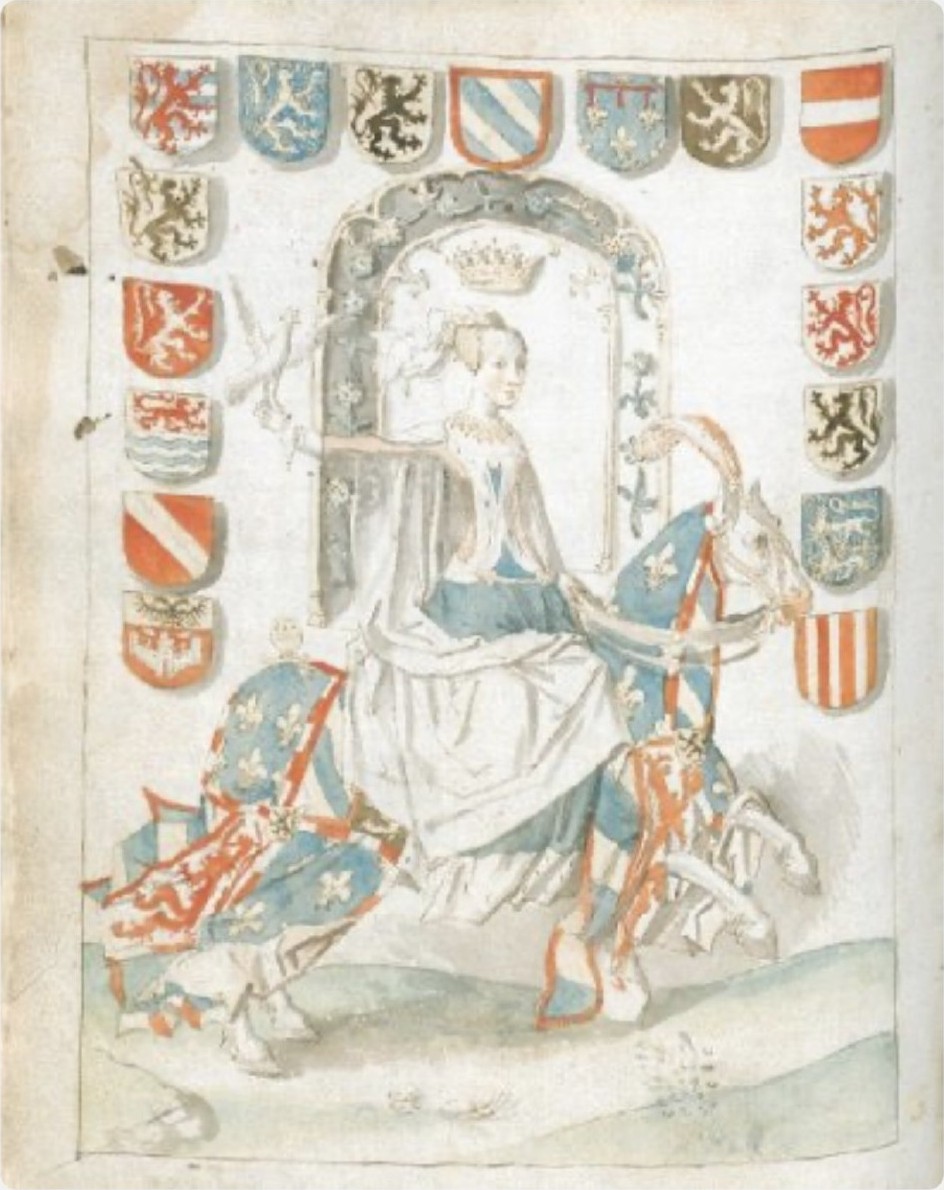
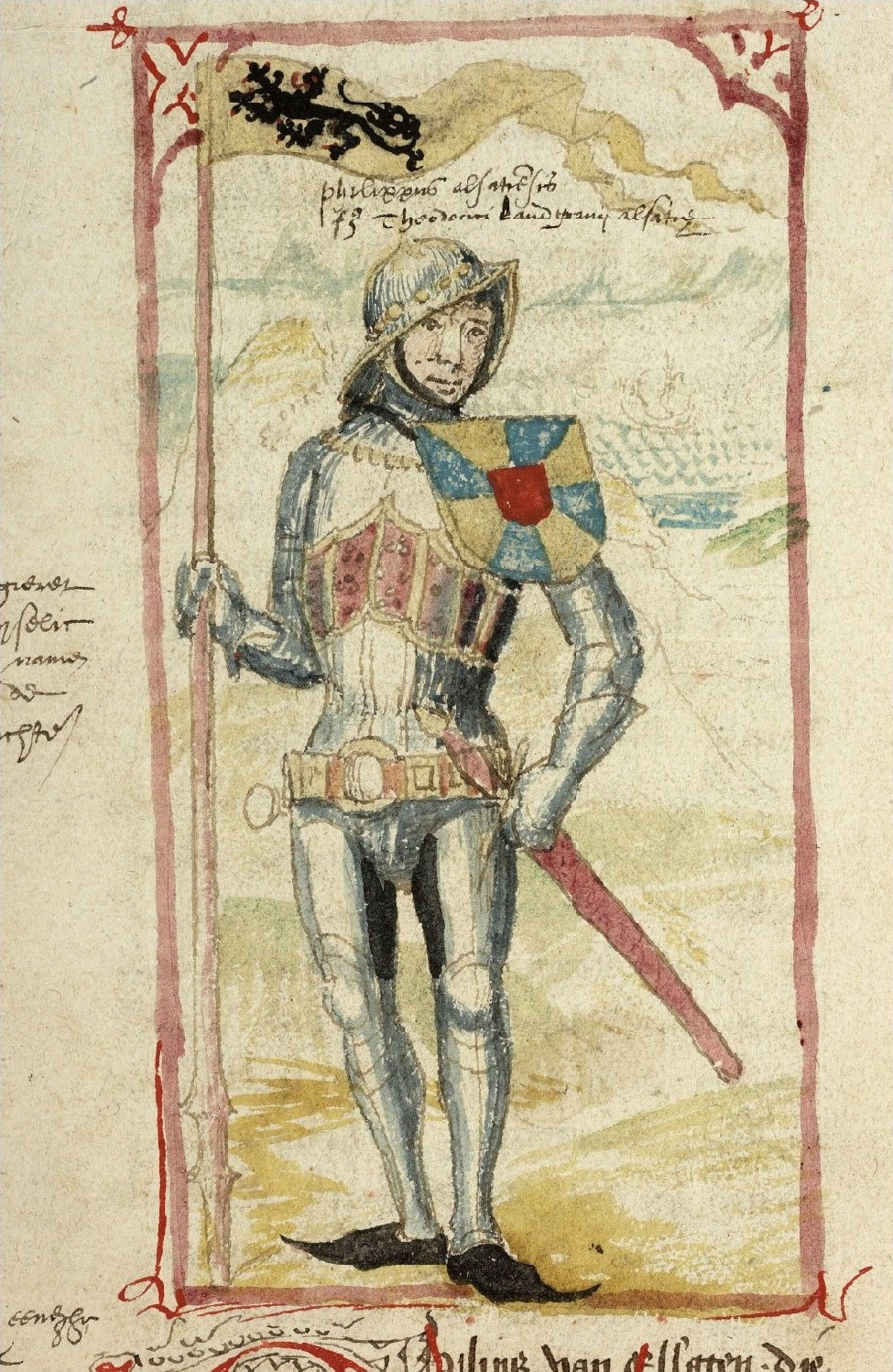
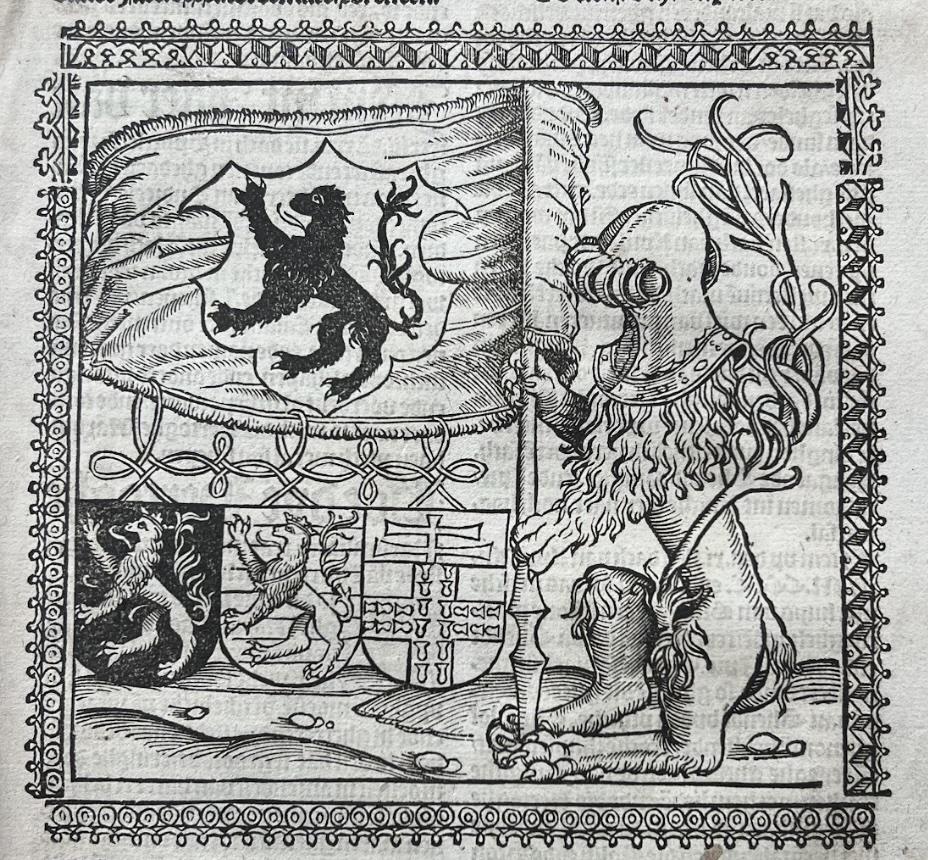
One of the most important medieval chronicles of Flanders is the Cronike Van Vlaenderen — the Chronicle of Flanders. This 15th-century manuscript documents the history of the Counts of Flanders and the great events of the region from its earliest recorded history. It is a remarkable work of medieval historiography, richly illustrated with heraldic shields and portraits of the Flemish nobility. The pages reproduced on this site are from the printed edition of this chronicle tradition, the Excellente Cronike van Vlaenderen (Antwerp: Willem Vorsterman, 1531).
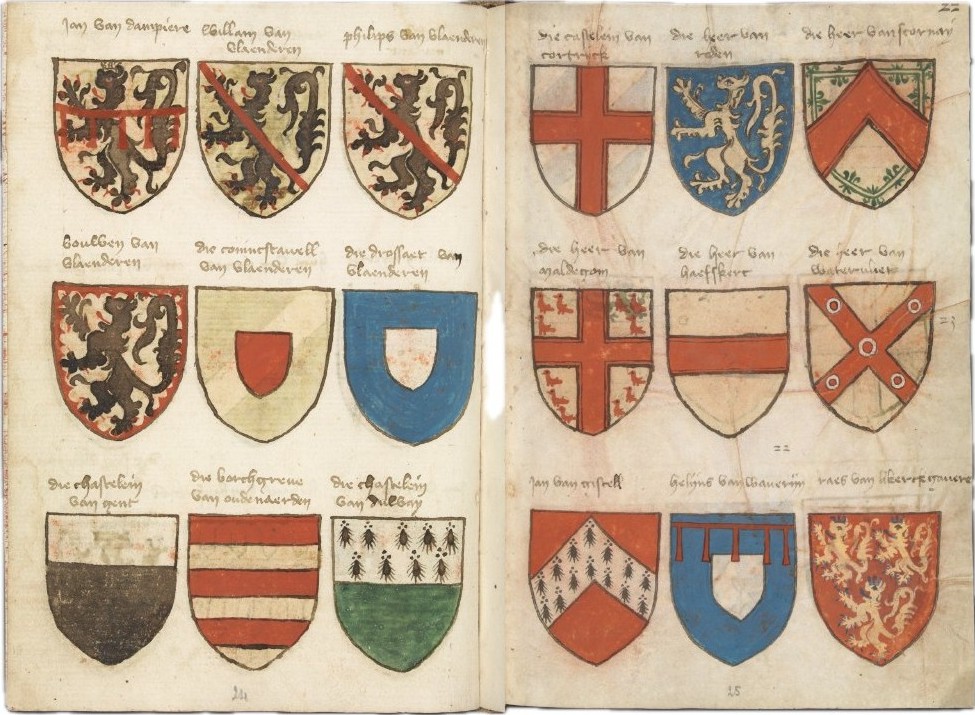
The chronicle is not a genealogical record of the Van Vlaenderen family, but it provides essential context for understanding the world in which the family lived. The Counts of Flanders — whose heraldic lion, the Leeuw van Vlaanderen, became the symbol of the entire region — shaped the political, economic, and cultural landscape that the Van Vlaenderen family inhabited for generations.
Notes and Sources
The analysis on this page is introductory. Fuller documentation, primary-source transcriptions, and evidence-level classifications are maintained on the research and dossier pages linked throughout.
[1] For the five documented bastard lines descending from Louis II de Male, Count of Flanders (1330–1384), see the Research page and its supporting dossiers. Primary charter data for Victor's natural sons derives from Olivarius Vredius (Olivier de Wrée), Genealogia Comitum Flandriae, Bruges 1642–43, Tabula XVI. See the Research page →
[2] For the four-function analysis in full, including primary source examples for each function and the distributional evidence across three centuries, see the Four Functions, Three Clusters article. Read the Four Functions analysis →
[3] Frans Debrabandere, Woordenboek van de familienamen in België en Noord-Frankrijk (WFB2), entry for Van Vlaenderen. The authoritative etymological dictionary classifies the name as a place-name (PlN). The CBG Familienamenbank version at cbgfamilienamen.nl incorporates the author's post-2003 manuscript revisions.
[4] Geneanet surname frequency data for Van Vlaenderen, accessed April 2026. The distributional patterns and heat-map evidence referenced above are analysed in full in the Four Functions article.
[5] Wilfried Beele, Studie van de Ieperse persoonsnamen uit de stads- en baljuwsrekeningen 1250–1400 (Handzame: Familia et Patria, 1975), Deel 2 (Glossarium), entry 2866, pp. 609–610, catalogues the complete Ypres run of the surname: seven bearers between 1280 and 1394, in Dutch, French, and Latin forms (van Vlaenderen, de Flandre, de Flandria), every one of them in the city and bailiff accounts (stads- en baljuwsrekeningen) and never in guild or population registers. Beele's own etymological note derives the name from the county of Flanders and from the smaller territories held directly by the count, an independent onomastic reading that points to the comital administrative circuit rather than a generic place-of-origin label. Consulted at the Library of Congress (PF1162 .B4), June 2026.
[6] The francophone naming convention — acknowledged natural children of the French royal house styled de France, de Valois, or de Bourbon — is documented across four reigns in Père Anselme, Histoire généalogique et chronologique de la maison royale de France, 3rd ed., 1726–33, Tome I.
[7] The medieval absence of the surname in the Zeeland border district (the Vier Ambachten) is established by M. Gysseling & F. Debrabandere, Persoonsnamen in de Vier Ambachten 14e en 15e eeuw, KCTD 71 (1999), pp. 491–588.